
BioAirMet Special Session @ 13th IAA Conference | November 2026
BioAirMet will host the special session "Standardisation of pollen monitoring instruments" at the 13th International Conference on Aerobiology which will take place November 25-29, 2026 in Kolkata, India. The detailed agenda will be available here soon.
Stakeholder Meeting | November 2026
The next BioAirMet stakeholder meeting will be held online on Wednesday, 11 November from 14:00 to 15:30 CET. The purpose of this meeting is to update on the project's outcomes and to gather stakeholder input. After a short introduction, each WP leader will make a 15 minute presentation, followed by time for questions and discussion.
WP1: Traceable calibration of automatic bioaerosol monitors with respect to particle number concentration
WP2: Creation of pollen and fungal spore datasets, and development of best practice for machine learning algorithms applied to pollen classification
WP3: Standardisation of automatic bioaerosol monitor data output, interface, and metadata; development of data storage, handling, and distribution guidelines
AutoPollen-SYLVA Training School
The AutoPollen Training School took place August 31 to September 4, 2026 in Rauris, Austria and offered an introduction to automatic bioaersol monitoring including the measurement principles of automatic devices, algorithm classification concepts, data handling and analysis. The training was targeted at early career scientists in the field of aerobiology, primarily master and PhD studends as well as postdocs. More info can be found on the AutoPollen website.
BioAirMet Project Meeting | August 2026
The BioAirMet 27 month project progress meeting was held online August 20-21, 2026.
Fungal Spores Online Tutorial
This online tutorial provides a step-by-step guide to both harvesting spores using a custom-built cyclone and aerosoling them for use with automatic measurement instruments. The tutorial was developed using audiovisual material captured during the training workshop held at Sciensano in October 2025.
Third BioAirMet Newsletter
The third BioAirMet Newsletter was released in April 2026 and can be accessed here. Please let us know if you would like to be added to our mailing list for future newsletters. This can be done using the contact button in the footer below.
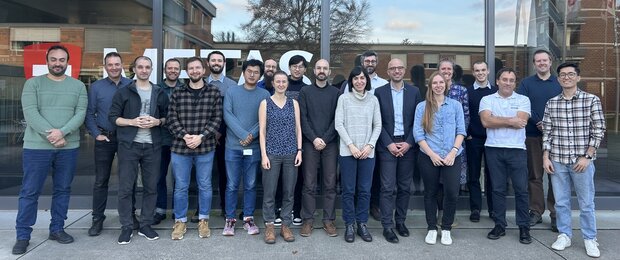
BioAirMet Project Meeting | November 2025
The 18M project progress meeting was held November 27-28 at METAS in Swizerland.
BioAirMet Stakeholder Workshop on Fungal Spores | October 28-29, 2025
An exclusive two-day Stakeholder Workshop was hosted by Sciensano and the BCCM/IHEM fungi collection, with participation of Dr Branko Sikoparija (BioSense institute).
This event presented and provided hands-on training on the innovative method described in the recently published article Advancing automated identification of airborne fungal spores: guidelines for cultivation and reference dataset creation. The workshop covered in depth the protocols for cultivation, dry harvesting, and aerosolisation of pure fungal spores, as well as the generation of training datasets using the automatic airflow cytometer SwisensPoleno Jupiter, based on holographic imaging and fluorescence spectroscopy. In addition to laboratory demonstrations, this was an opportunity to share expertise and practical tips in mycology.
Link to SYLVA
The BioAirMet project is linked with the EUMETNET Autopollen SYLVA Network. SYLVA's overall goal is to achieve a radical improvement and fill gaps in temporal resolution, timeliness, coverage, and availability of information about aeroallergens and other bioaerosols, which are important indicators and modulators of climate change, affect human and plant health, and play a vital role in ecosystems. SYLVA technological innovations will be accompanied with new infrastructure, distribution and exploitation pathways, and links with stakeholders to ensure technology uptake and sustainability beyond the lifetime of the project.
Second BioAirMet Newsletter
A second BioAirMet Newsletter was released in August 2025 and can be accessed here. Please let us know if you would like to be added to our mailing list for future newsletters. This can be done using the contact button in the footer below.
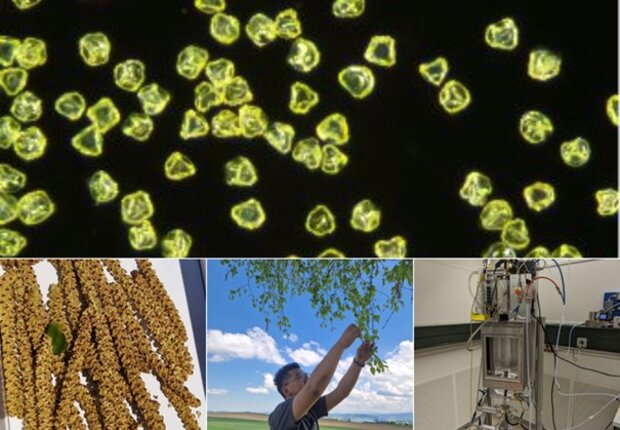
Investigating Pollen Detection and Monitoring Workshop
We were thrilled to return to the Federal Institute of Metrology (METAS) in Switzerland for another cutting-edge workshop - this time focusing on the collection, aerosolization, and monitoring of pollen particles. This collaborative event brought together researchers, instruments, and real-world environmental samples to further advance the science of bioaerosol detection.
Key Highlights:
Real-World Sampling: Pollen grains were freshly collected from catkins in the field, ensuring realistic conditions for aerosolization and testing.
Technology in Action: The collected pollen was introduced into advanced monitoring systems, including the Swisens AG Poleno and ŌBERON SCIENCES Aerotape, to evaluate their detection capacities and the effect of pollen aging.
EXPO 2025 | Osaka, Japan
The BioAirMet project will be represented at the EXPO 2025, Designing Future Society for Our Lives, held in Osaka, Japan. Partners from METAS and MeteoSwiss have prepared a project flyer which will be displayed in the Swiss pavilion for the duration of the EXPO.
BioAirMet Open Stakeholder Meeting | May 2025
An online open stakeholder meeting was held May 7, 14:00-16:00 CEST to provide an update on project progress and gather stakeholder input on various topics from work packages 1-3:
-
Introduction to the project
-
WP1: Traceable calibration of automatic bioaerosol monitors with respect to particle number concentration
-
WP2: Creation of pollen and fungal spore datasets and development of good practices for machine learning algorithms applied to pollen classification
-
WP3: Standarisation of the data output, interface and metadata of the automatic bioaerosol monitors; development of guidelines on data storage, handling and distribution
The meeting was attended by over 20 persons from NMIs, industry and academia.
BioAirMet Project Meeting | February 2025
The BioAirMet 9 month project progress meeting was held online in the afternoons of February 11 and 13, 2025.
First BioAirMet Newsletter
The first BioAirMet Newsletter was released in December 2024 and can be accessed here. Please let us know if you would like to be added to our mailing list for future newsletters. This can be done using the contact button in the footer below.
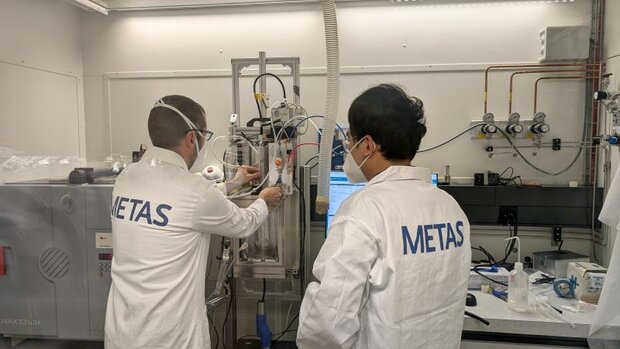
Fungal Spores Workshop | December 2024
A workshop was held at the Federal Institute of Metrology (METAS) in Switzerland in December 2024, focusing on the aerosolization and monitoring of fungal spores. This hands-on event brought together cutting-edge technology and world-class expertise to deepen our understanding of bioaerosols and their behavior under various conditions.
Diverse Fungal Strains: Spores from the BCCM - Belgian Coordinated Collections of Microorganisms-IHEM collection at Sciensano were harvested and used to test the performance of several automatic monitoring systems. Technology at Work: Participants explored the capabilities of advanced monitors, including the Swisens AG Poleno, HUND BAA500, and ŌBERON SCIENCES Aerotape, in detecting and analyzing fungal spores. Aging experiments: The workshop also delved into the effects of ozone and coating with organic compounds on the aging of fungal spores, examining how exposure impacts aerosolized spore properties. This collaboration showcased the intersection of metrology, environmental science, and public health, providing valuable insights into the behavior of fungal bioaerosols, a critical area of study for improving air quality monitoring and environmental safety. A huge thank you to the partners METAS, Technical University of Munich, Sciensano and the dedicated companies behind this innovative research!
Link to EUMETNET AutoPollen
The EUMETNET AutoPollen is developing an automatic monitoring network across Europe, covering all aspects of the information chain: from the initial measurements through to services and products designed to meet end-user needs. EUMETNET seeks to take full advantage of the large potential for progress that automatic observations provide. It brings together a consortium from across Europe with the multidisciplinary expertise needed to address the challenges along the entire information chain – from the initial observation through to the final products and services co-designed with end users. The programme is particularly innovative in its cooperation and standardisation from-the-start approach. AutoPollen also favours synergies with a wide range of communities beyond traditional aerobiology, leading to improved service provision and additional savings.
The BioAirMet project is listed by EUMETNET as one of several ongoing projects and activities related to automatic pollen and fungal spore monitoring across Europe.
International Aerobiology Newsletter | August 2024
The work of the BioAirMet project in conjunction with the AutoPollen network is mentioned in the International Aerobiology Newsletter, volume 95, August 2024, see page 20.
From Algorithms to Allergies
The BioAirMet project is featured in the blog post "From Algorithms to Allergies" on the AI Standards Hub. The BioAirMet project brings together metrology institutes, research organisations, and instrument manufacturers to develop techniques for validation of AI algorithms for pollen classification. This includes methods for uncertainty propagation and for sensitivity analysis to understand how the characteristics of the training data affect algorithm performance. The project team will then feed their findings back to two relevant standards committees. The work will contribute to the development of a new standard on automatic pollen and fungal spore monitoring within the CEN/TC 264/WG 39 – Sampling and Analysis of Airborne Pollen Grains and Fungal Spores, and will contribute to the revision of existing standards published by CEN/TC 264/WG 28 – Measurement of Airborne Microorganisms in Ambient Air.
World Aerobiology 2024
The BioAirMet project was mentioned in the presentation "Aerotape: real-time detection of ragweed pollens by optical imaging," at World Aerobiology 2024, held in Vilnius July 1-5, 2024. See pages 108-109 of the Abstract Book.
Follow us!
Follow us on LinkedIn! https://www.linkedin.com/company/bioairmet/
Aerosol Measurements for Better Air and Health
The BioAirMet project is featured in the article "Aerosol Measurements for Better Air and Health." By improving the measurement and characterization of aersols - tiny particles suspended in the air - using large-scale research facilities like MAX IV, air quality and public health can be improved. Read the entire article using this link.
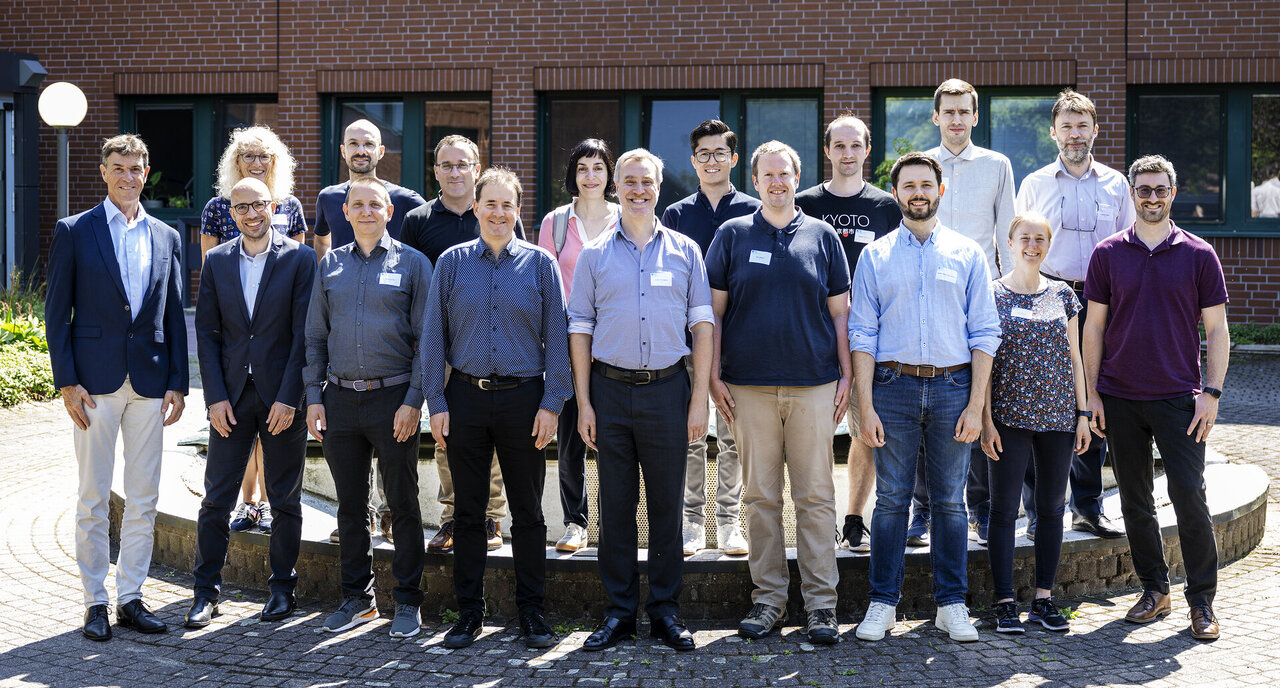
BioAirMet Kick-Off Meeting | June 2024
The BioAirMet Kick-Off Meeting was held June 25-26, 2024 at PTB in Braunschweig, Germany.